
Ramadhan in the Hijri Year (the Islamic calendar) of 1446 started on 1st March 2025. As part of my routine during Ramadhan, I usually do a study of one of the chapters in the Qur’an. This year, with the blog, I intend to do a reflection of natural phenomena found in the Qur’an. To frame it within the context of the key principles of:
- being still/silent
- observe
- reflect
- practice
this series will focus on the third key principle and give ideas on the fourth. If you would like to know more about the key principles, please click this link. If you want to see an example of how the key principles are applied, please click this link.
Gardens
The garden is one good way to bring nature closer to us. It gives us a chance to observe the cycle of life and connect us back to the elements and vegetation. It is also flexible enough that you can have a lovely wee garden indoors even if you don’t have land.
The past few weekends I have had the pleasure of working in my wee garden, preparing it for spring. I managed to plant two cherry saplings and a couple of blueberry shrubs on one weekend. God willing, they will grow well in their new surroundings. As I worked in the garden, I noticed the crocuses and tulips coming up, signalling that spring is upon us. Also, there is a lovely growth of moss at the base of the apple tree. New life is stirring and the garden is coming back to life.
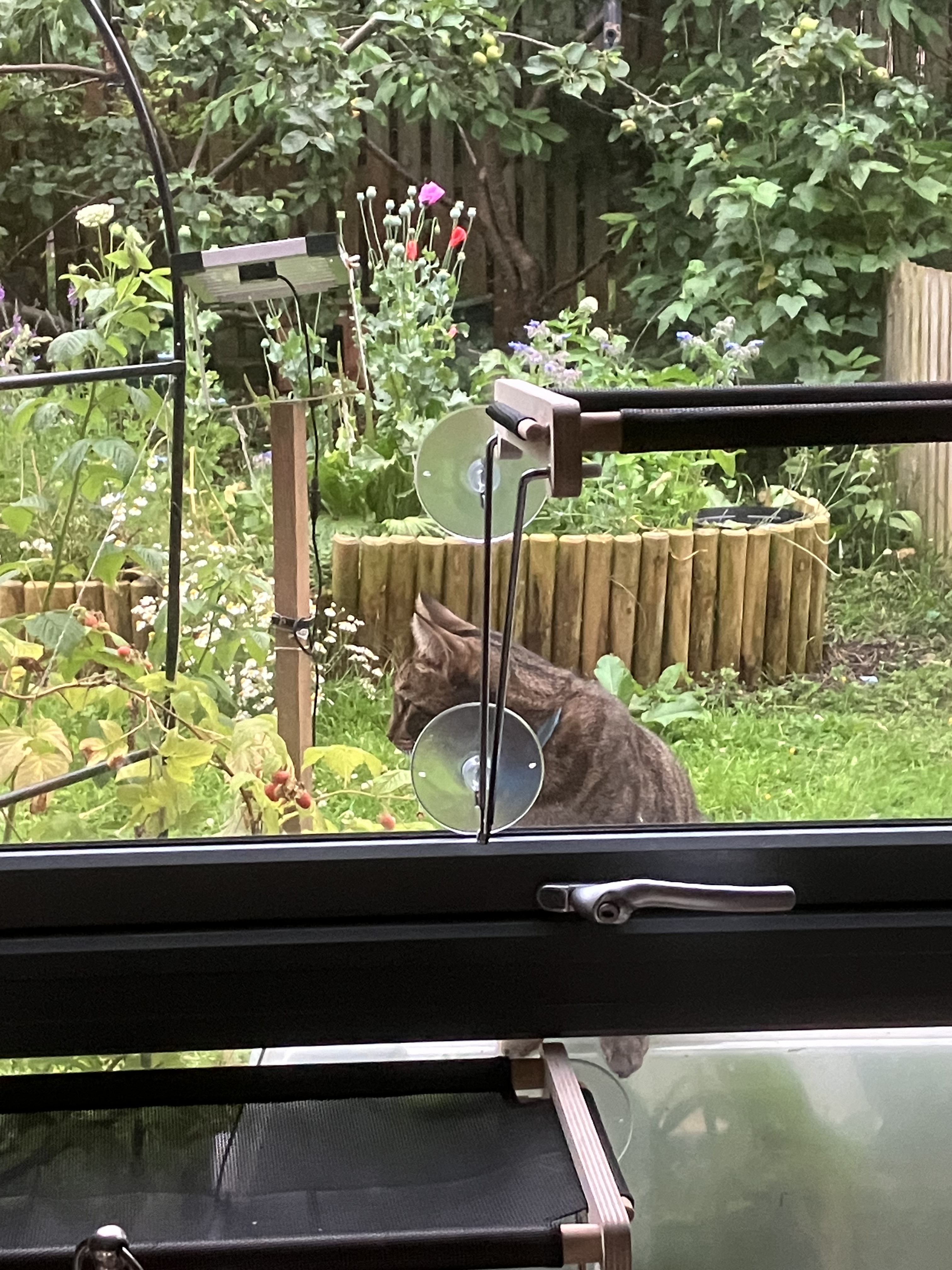
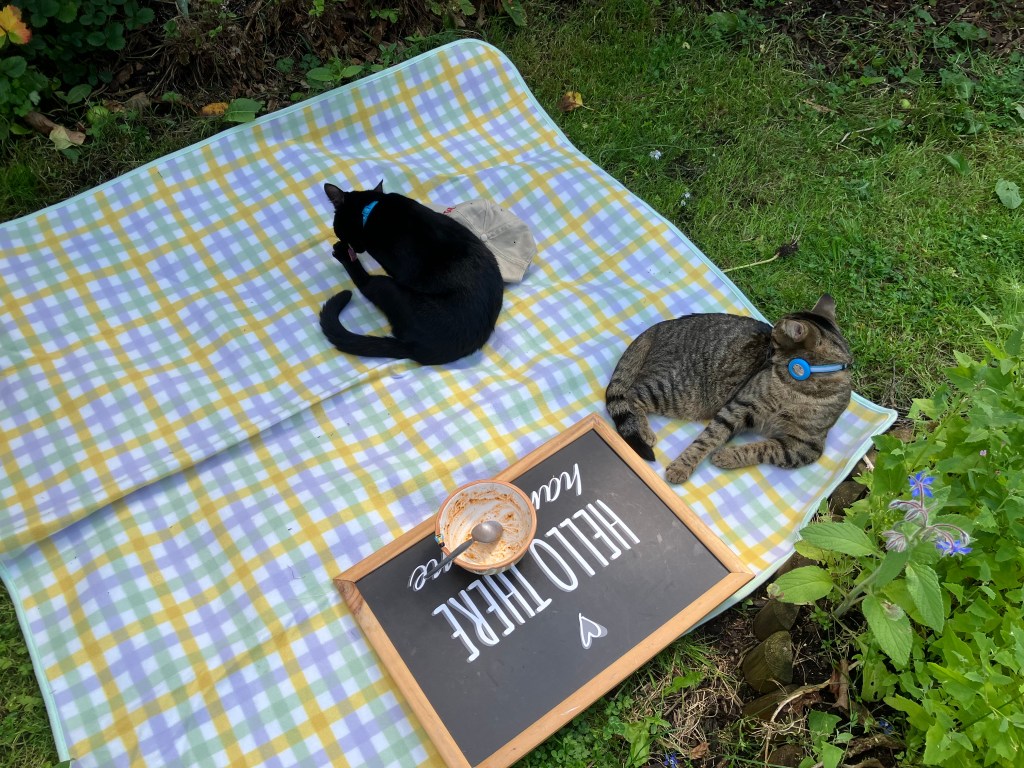
My cats love the garden. The above two photos are of Merry and Pippin last summer in the garden. But of all my cats, the garden was Chewie’s favourite place. Other cats and creatures come to visit too. A garden can be a refuge and an oasis for all creatures if done right. It certainly is a refuge for me as I need the regulation nature brings to my senses.
It also holds a lot of lessons for us. Here are some of the things I have learned from the garden.
Transient
In the back of our minds, we are of course aware of life and death. Everything dies in the end. But what the garden does for me is bring it up close and personal. In the course of a season, plants will start to grow as the crocuses and the tulips are now. They bloom and then wilt away, reminding me of the verse in Surah Al-Kahf 18:45
وَٱضۡرِبۡ لَهُم مَّثَلَ ٱلۡحَيَوٰةِ ٱلدُّنۡيَا كَمَآءٍ أَنزَلۡنَـٰهُ مِنَ ٱلسَّمَآءِ فَٱخۡتَلَطَ بِهِۦ نَبَاتُ ٱلۡأَرۡضِ فَأَصۡبَحَ هَشِيمً۬ا تَذۡرُوهُ ٱلرِّيَـٰحُۗ وَكَانَ ٱللَّهُ عَلَىٰ كُلِّ شَىۡءٍ۬ مُّقۡتَدِرًا (٤٥)
Set forth to them the similitude of the life of this world: it is like the rain which We send down from the skies: the earth’s vegetation absorbs it, But soon it becomes dry stubble, which the winds do scatter: it is (only) Allah Who prevails over all things. (45)
Even trees die. Ultimately all will return to God for that is the reality of this world – it is transient. We are but travellers taking our rest at this way station called Earth. If so, why am I so attached to it? How do I let go?
But life starts anew as seasons change and spring comes back. Death is not permanent either. Once again it reminds me that ultimately I will be brought back to life and made accountable for my actions. So what have I sent forth? Is He pleased with me?
God’s will prevails
Any honest gardener will tell you that they can only do their best help nurture the plants. They have no control over what grows or otherwise. This lesson was delivered to me years ago when a vegetable I threw out into the compost pile started growing. At the same time, a plant I was putting my care towards wilted and died. God’s will prevailed in both cases. It is my duty to accept the decree and move on. That does not mean that I don’t need to care for the plants in the garden. But the outcome is not in my hands.
Similarly, in our lives, we need to put our best forward, the concept of ihsan. However, we need to remember that the outcome is not up to us. It is not easy to accept because we are so used to linking cause and effect.
Entitlement
Linked to the two lessons above is the story of the man with a sense of entitlement in Surah Al-Kahf 8:32-44
Set forth to them the parable of two men: for one of them We provided two gardens of grapevines and surrounded them with date-palms: in between the two We placed corn-fields. (32)
Each of those gardens brought forth its produce, and failed not in the least therein: in the midst of them We caused a river to flow. (33)
(Abundant) was the produce this man had: he said to his companion, in the course of a mutual argument: “More wealth have I than you, and more honour and power in (my following of) men.” (34)
He went into his garden in a state (of mind) unjust to his soul: He said “I deem not that this will ever perish. (35)
“Nor do I deem that the Hour (of Judgment) will (ever) come: even if I am brought back to my Lord I shall surely find (there) something better in exchange.” (36)
His companion said to him, in the course of the argument with him: “Dost thou deny Him Who created thee out of dust then out of a sperm-drop, then fashioned thee into a man? (37)
“But (I think) for my part that he is Allah, my Lord, and none shall I associate with my Lord. (38)
“Why didst thou not, as thou wentest into thy garden, say: `Allah’s Will (be done)! There is no power but with Allah!’ If thou dost see me less than thee in wealth and sons (39)
“It may be that my Lord will give me something better than thy garden, and that He will send on thy garden thunderbolts (by way of reckoning) from heaven, making it (but) slippery sand!― (40)
“Or the water of the garden will run off underground so that thou wilt never be able to find it.” (41)
So his fruits (and enjoyment) were encompassed (with ruin), and he remained twisting and turning his hands over what he had spent on his property, which had (now) tumbled to pieces to its very foundations, and he could only say “Woe is me! would I had never ascribed partners to my Lord and Cherisher!” (42)
Nor had he numbers to help him against Allah, nor was he able to deliver himself. (43)
There, the (only) protection comes from Allah, the True One. He is the Best to reward and the Best to give success. (44)
I usually think on this when I am in the garden. Do I have that same sense of entitlement because of what God has provided me with? That I am taking things for granted? That the garden and wealth will remain forever? That I expect my actions are enough for me to enter paradise?
A reflection of Paradise
The Qur’an is full of description of Paradise as a lush garden. For example, Surah Ar-Rahman (55) describe the gardens as many varying hues and full of all kinds of fruits. The Earth is a reflection and a representation of Paradise in this world. Nature in its glory has many varying hues and full of all kinds of fruits. And the garden is but a miniature and curated version of the natural world.
In Surah Al-Baqarah 2:35 and Surah Al-A’raf 7:19, Adam is mentioned to have stayed in the Garden for a time. It is my theory that we feel a sense of comfort out in nature because of this ancestral memory. I have often wondered why God let Adam and his wife to stay in the Garden. They, and us, are meant to be God’s stewards on Earth so why not send them straight here?
My thoughts on the answer is not be what the scholars say but these are my reflections:
- By staying in the Garden for a time, they understand the potential of what nature could do and be. This is also reflected in the knowledge of the names God taught Adam. This ancestral memory aids us in becoming better stewards.
- They needed to be tested through the small prohibition of the tree, the test of temptation and of immortality (i.e. permanence). Because this world is full of tests and as stewards, we need wisdom and steadfastness in facing them.
- While they failed their test, their repentance showed them capable of change. As we navigate our duty as stewards, we will make mistake. Our willingness to own up and change is important to keep the course steady.
In today’s world, given the challenges to nature, it is important for us to turn back to the Creator. His guidance is needed to help nature flourish once again and reach its full potential.

Leave a comment