
In this series of posts, we focus on our connection with different places. Places are an important part of nature even if we don’t often view them that way. Different geographical locations support different ecosystems and with differing interactions with the various elements of nature. For example, a tropical rain forest in Singapore is starkly different from a temperate rain forest in Scotland. However, they do share similar characteristics. And these are the features the series focus on as we build our connections to a given place and location.
In this post, we focus on the beach, a meeting point between the sea and land. I have chosen the beach because a beach is a liminal space. Liminal spaces, i.e. transitional spaces, are really rich in biodiversity precisely because it is the boundary, the in-between. The beach, in particular, is particularly interesting because its physical location shifts with the tide. And as the boundary shifts, it either hides or uncover the treasures of the sea. The beach is also constantly reshaping itself as the sand gets moved by the wind and sea currents.
Growing up in Singapore, a small island nation, I really felt an affinity to the beach. Back then, the sea wasn’t as polluted as it is now. And we had several beaches to explore and swim in. Changi beach was my mother’s favourite because she grew up in that area. My father would often take toddler me to the beach, with my pail and spade. As I grew older, sitting on the breakwaters or under a shady tree on the beach became my refuge. Studying in University of New South Wales years ago, I had easy access to Coogee Bay. I remember the sandy beach and the rocks, perfect for watching the sunrise. I am grateful, living in Edinburgh now, the sea isn’t too far away and there are great beaches to explore.
Engaging the senses
Being a liminal space, the beach is one of the best places to engage the senses. Sounds, sights, smells and so much more. Two years ago, I was at Kildonan Beach in South Uist and took the video below. The video shows the antics of a pair of birds right in the tufts of grass. You can also listen to the lap of water and the call of the nearby oystercatcher.
Just sitting down and watching the birds play allows my mind to slowly process the various inputs to my senses. It goes back to the first principle of being still and/silent.
One of my favourite sounds in the world is that of the waves. Below is a short video I took of the waves crashing on the rocks.
The power of the waves eroding and shaping the hard rocks is stupendous to watch. On this day, I had walked quite a way to get to this wee beach. Sitting on the rocks, it was a pleasure to feel the sea spray on my skin. I remember I took off my boots, rolled up my trousers, and strolled into the water. The cool water was a balm to my aching feet.
Walking barefoot along the beach is a great way to engage the senses. I love the feel of the sand crunching underneath the feet and between the toes. The uneven way the sand gives way challenges my balance and makes me more aware of my body. Then there is different texture of the wet and dry sand.
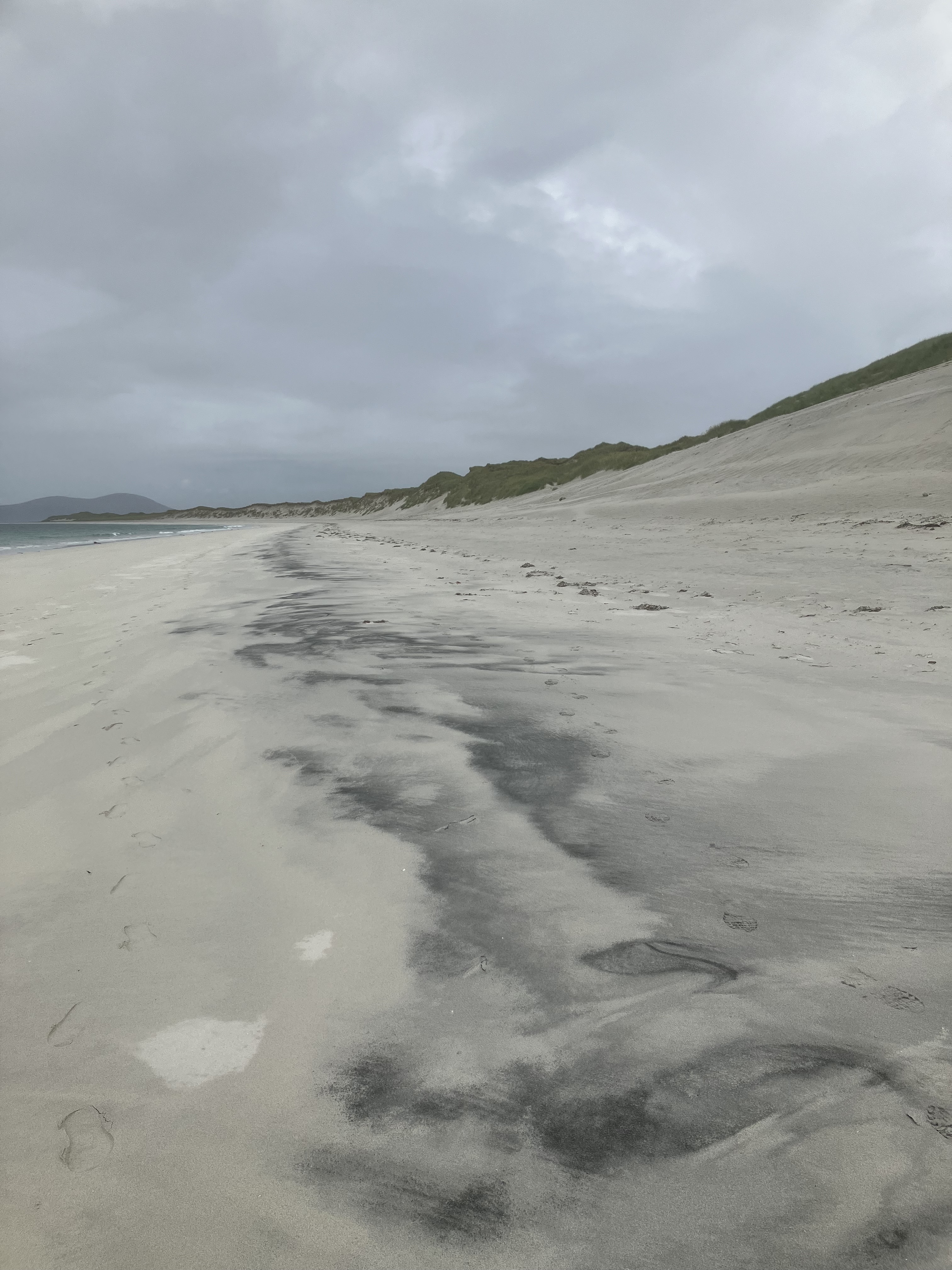
There is so much to discover on the beach and every single time, it is different. For example, in the photo below, the receding sea level created this beautiful art work in the sand. It is erased by the wind and oncoming tide before forming new patterns at the next cycle.
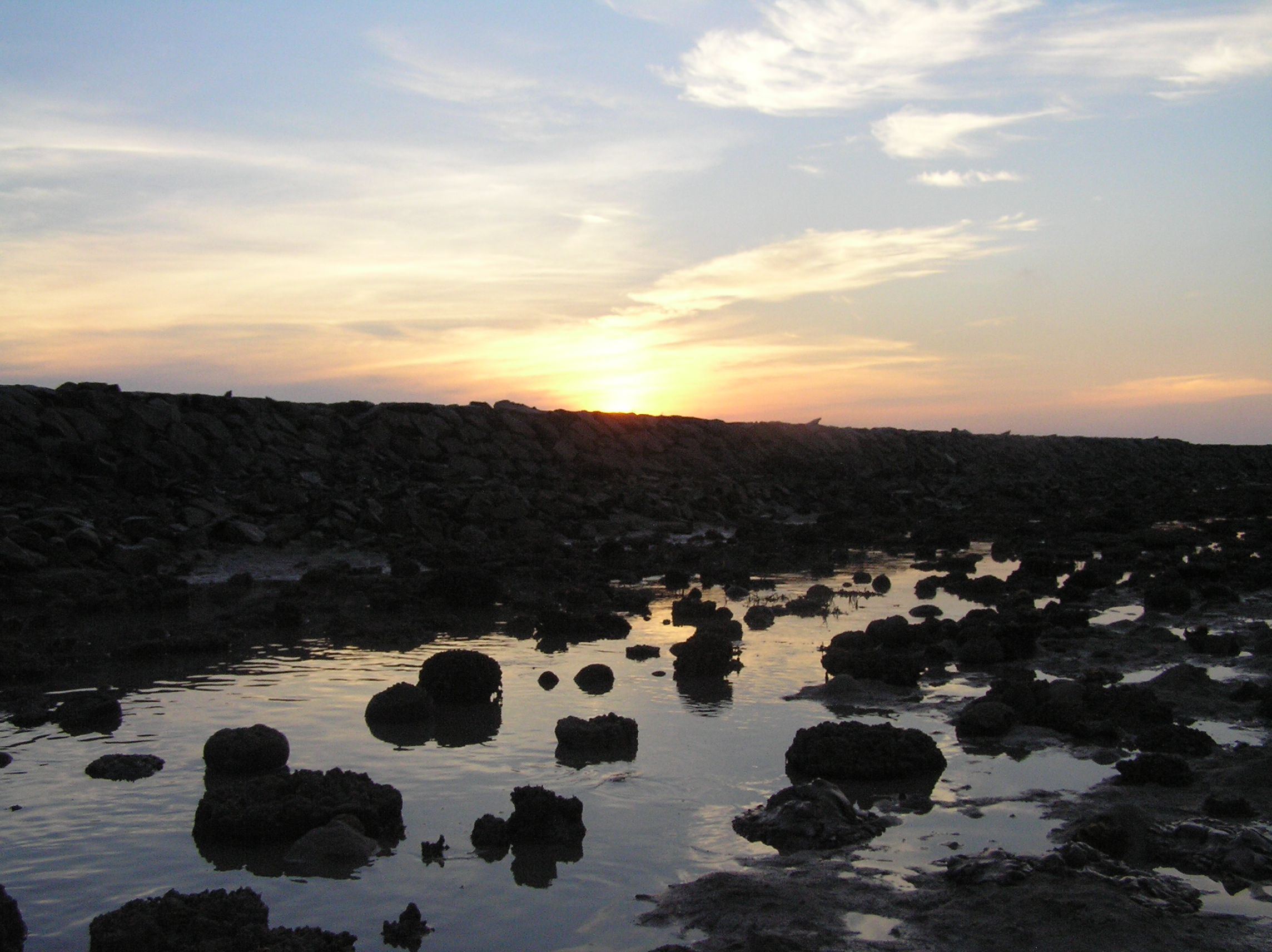
I always imagine the beach as God’s canvas on which He creates mesmerizing and colourful art. Like the photo below, capturing the sunrise on the beach at low tide. I took this photo years ago when exploring the coral reefs in Singapore’s Kusu Island. The soft glow of light was reflected by the pools of water left by the tide. Very different from the normally harsh tropical sunlight.
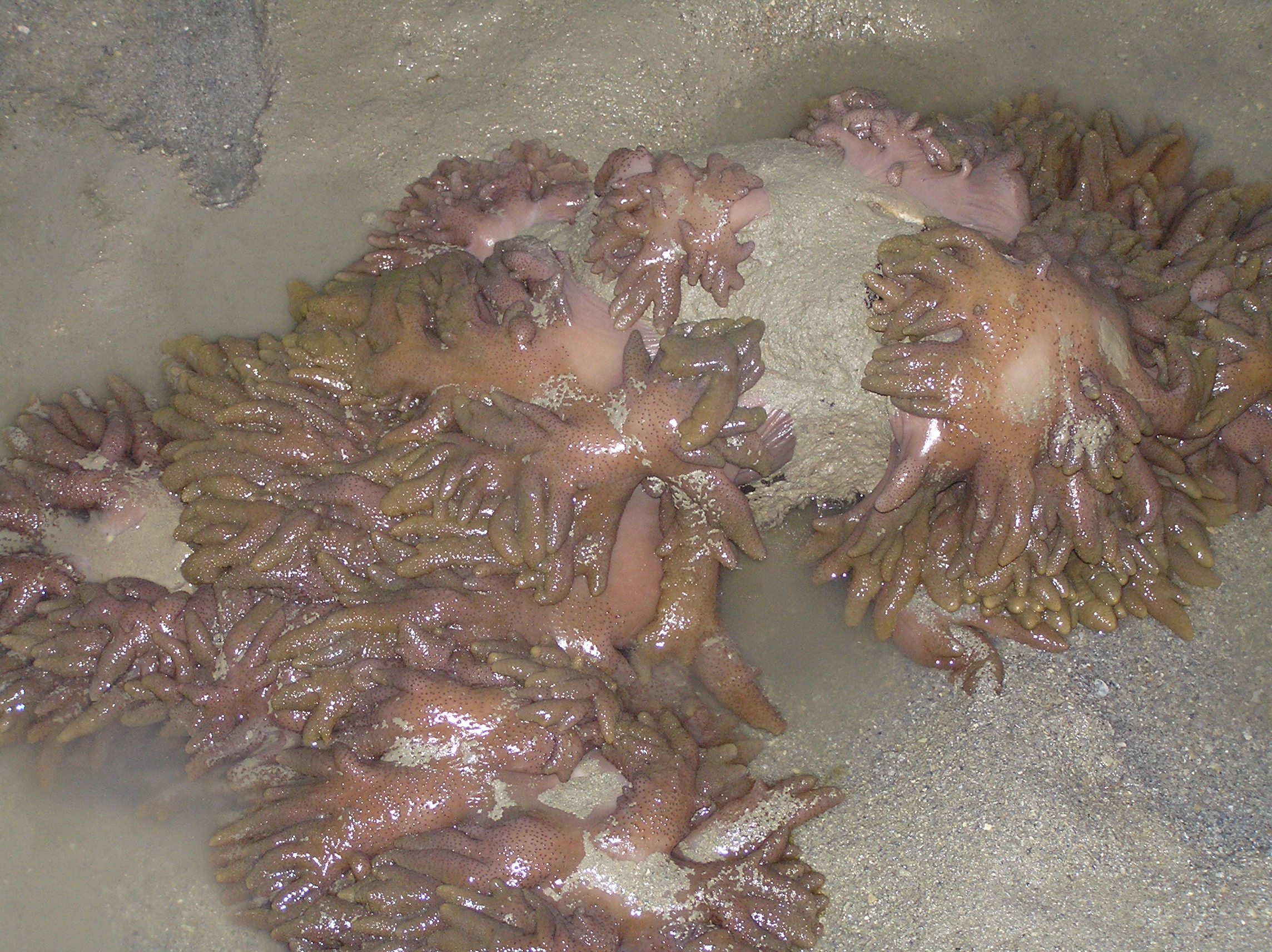
Walking carefully across the coral reef at low tide is a wonderful experience. The low tide allowed us to discover a whole different world that we would have had to swim/snorkel/dive otherwise. Like the starfish wriggling in the sand or the sea anemone attached to the rocks. And the sea grapes that look very similar albeit tiny versions of grapes.


There is something enchanting about the beach with its constantly changing landscape that is difficult to be captured elsewhere. I have never known anywhere else that changes from second to second. Yet for all of the changes that occur, there is a sense of permanence to it. Where the land meets the sea, the beach is always there.
Reflecting on beaches
This was something I wrote years back in 1996 at East Coast Beach in Singapore. It still resonates with me today, especially about reality.
Sitting by the beach, just after the rain and the sky is still grey, I cannot see the horizon.
The horizon; a “false” break between the earth and the sky, which in “reality” there isn’t. I’ve been thinking, a lot of things on my mind. Especially about “reality” and what we perceive by our senses.
There, in the horizon, is a lesson to be learned. What we perceive may not be what is truth. How then can we judge the truth? What is true? How do we recognise it?
“Truth is clear and falsehood is clear.” Maybe the Prophet s.a.w. said that – I can’t remember.
I see some people fishing and am reminded of a passage I once read a long time ago. “For many, fishing is a challenge, a competition but for the French, it is a way to relax, to think, to reflect. Fishing is a soothing pastime. While waiting for the fishes to take the bait, one has a lot of time on one’s hand to reflect.” What kind of reflection would I seek if I was a fisherman? What “fish” do I hope to catch?
The sound of the waves hitting the shore, the waves coming in one after another and dissipating, creeping back to where it comes from. White foams on the beach soon to vanish away, replaced by others. Life is like that too. Old memories forgotten, replaced by the new.
Rereading this reflection, the question of reality and truth vs falsehood is so important today. Like the foams of the sea, falsehood will ultimately dissipate and disappear and what remains is the truth. Today, we see so many conflicting messages and propaganda, some dressed as facts. But these will not stand the test of time.
Action
Like the beach that is constantly changing yet some things endure. For example, the ever present waves which slowly erodes and weather the land they come in contact with. The Great Ocean Road in Australia is a spectacular landscape shaped by the waves. Similarly, consistent actions which might seem small will bear their mark in time. Therefore one action that we can all do is be consistent in our choice of action to make this world a better place for all.

Leave a comment