
In this series of posts, we focus on our connection with different places and time. Time is an integral aspect of nature because it shapes the natural rhythm of life. From the seasonal cycle to the daily cycle that governs the ecosystem.
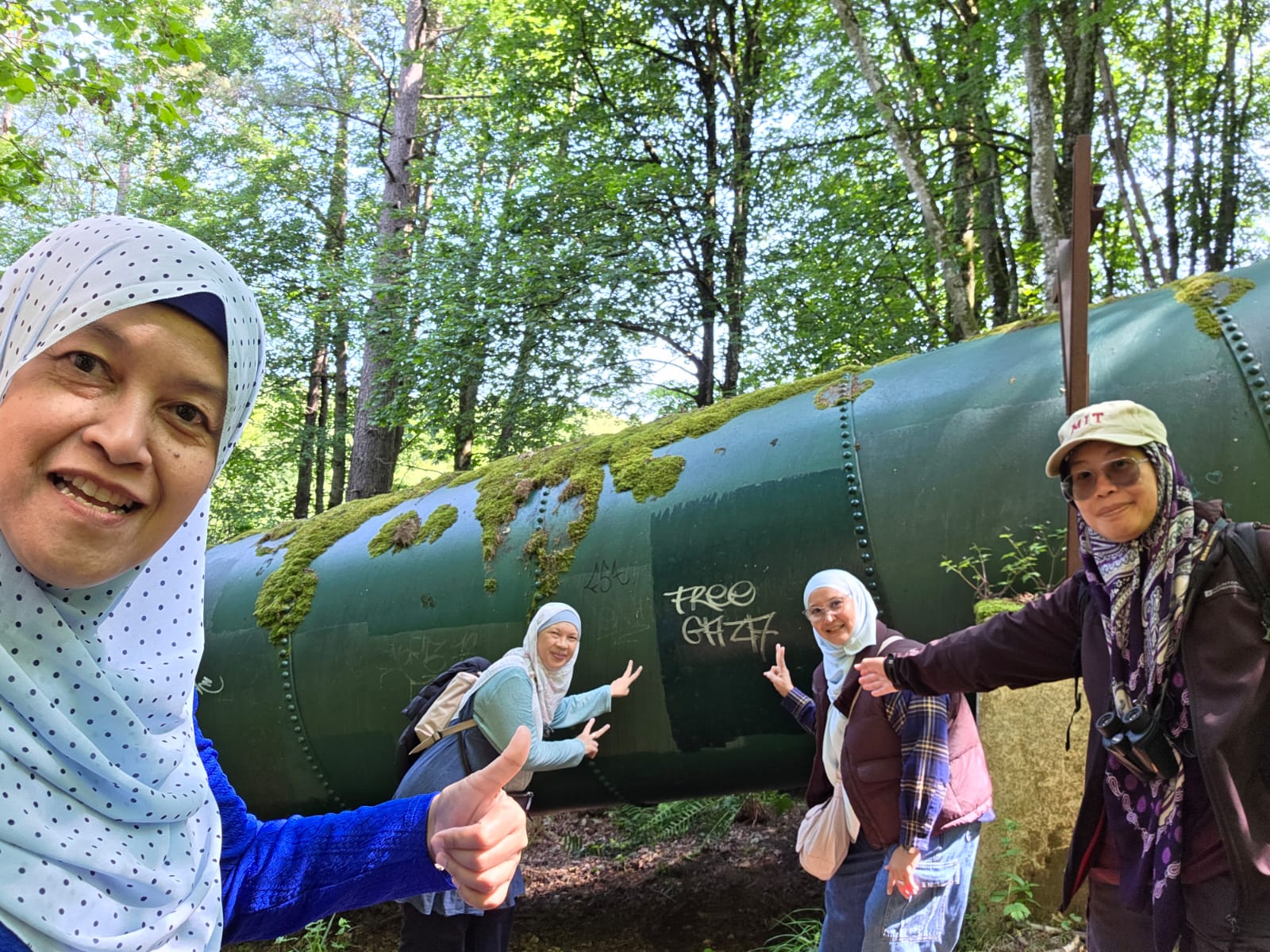
It’s been nearly a month since I last wrote a post. A good reunion break with old university mates from UNSW as they made time to visit me in Scotland. Being teachers in Singapore, they had June off as part of the school holidays. Coincidentally, it is early summer here and the days were long. So we were able to fit in a packed itinerary. One of them was to New Lanark where we went for a walk to the Falls of Clyde.
As I write this, the sun is shining and I am taking a break from doing some gardening due to the heat. Just two Fridays ago, it was recorded as the hottest day of the year. 29 degrees in Edinburgh is extremely hot. The summer is definitely settling in. It is also the 4th of Muharram 1447, the first month of the Islamic calendar, which is a lunar calendar. That is, it follows the cycle of the moon. And so I thought it would be a good topic to ease us back into getting connected to nature.
Nature’s patterns and rhythm
For many of us, we are not conscious of the seasons or lunar cycle. Especially if we live in the tropics where there is really only monsoon/rainy season or otherwise. Given the climate catastrophe, it is difficult to pinpoint the start and end of a given season. For example, I was in Singapore last November/December and it was hot and dry. Usually that was the monsoon season. As for the lunar cycle, most of us don’t really keep track of it. Even the daily cycles of sunrise and sunset, high and low tides are nowhere near our modern consciousness.
Yet, these are important patterns and rhythms that govern the ecosystem which we depend on. The seasons dictate the growing cycles of plants which feeds us and our livestock. The lunar cycle dictate the tides which impact the marine ecosystem. It also influence the nocturnal activities of animals as the lunar cycle regulates the amount of light at night.
As part of the 4 key principles of connecting to nature:
- silence/stillness
- observation
- reflection
- action
this post is focused on observing how intimately Muslims connected to the instruments of time – the sun and the moon – through our religious practice. And I encourage readers to take their own actions to create their own practices.
Islamic practices and the natural cycle
As a Muslim, I am grateful for the way Islam celebrates and emphasises the natural cycles. In my favourite Surah, Surah Ar-Rahman: 1-12, the connection between solar and lunar cycles with the Earth’s ecosystem really shines through:
ٱلرَّحۡمَـٰنُ (١) عَلَّمَ ٱلۡقُرۡءَانَ (٢) خَلَقَ ٱلۡإِنسَـٰنَ (٣) عَلَّمَهُ ٱلۡبَيَانَ (٤) ٱلشَّمۡسُ وَٱلۡقَمَرُ بِحُسۡبَانٍ۬ (٥) وَٱلنَّجۡمُ وَٱلشَّجَرُ يَسۡجُدَانِ (٦) وَٱلسَّمَآءَ رَفَعَهَا وَوَضَعَ ٱلۡمِيزَانَ (٧) أَلَّا تَطۡغَوۡاْ فِى ٱلۡمِيزَانِ (٨) وَأَقِيمُواْ ٱلۡوَزۡنَ بِٱلۡقِسۡطِ وَلَا تُخۡسِرُواْ ٱلۡمِيزَانَ (٩) وَٱلۡأَرۡضَ وَضَعَهَا لِلۡأَنَامِ (١٠) فِيہَا فَـٰكِهَةٌ۬ وَٱلنَّخۡلُ ذَاتُ ٱلۡأَكۡمَامِ (١١) وَٱلۡحَبُّ ذُو ٱلۡعَصۡفِ وَٱلرَّيۡحَانُ (١٢)
THE MOST GRACIOUS (1) has imparted this Qur’an [unto man]. (2) He has created man: (3) He has imparted unto him articulate thought and speech. (4) [At His behest] the sun and the moon run their appointed courses. (5) [before Him] prostrate themselves the stars and the trees. (6) And the skies has He raised high, and has devised [for all things] a measure, (7) so that you [too, O men,] might never transgress the measure [of what is right]. (8) Weigh, therefore, [your deeds] with equity, and cut not the measure short! (9) And the earth has He spread out for all living beings, (10) with fruit thereon, and palm trees with sheathed clusters [of dates], (11) and grain growing tall on its stalks, and sweet-smelling plants. (12)
And in all of these connections is God’s Grace. That it is by His Grace and Mercy that the duration of time and the ecosystems function as they do. In another part of the surah, Surah Ar-Rahman: 26-30 states
كُلُّ مَنۡ عَلَيۡہَا فَانٍ۬ (٢٦) وَيَبۡقَىٰ وَجۡهُ رَبِّكَ ذُو ٱلۡجَلَـٰلِ وَٱلۡإِكۡرَامِ (٢٧) فَبِأَىِّ ءَالَآءِ رَبِّكُمَا تُكَذِّبَانِ (٢٨) يَسۡــٴَـلُهُ مَن فِى ٱلسَّمَـٰوَٲتِ وَٱلۡأَرۡضِۚ كُلَّ يَوۡمٍ هُوَ فِى شَأۡنٍ۬ (٢٩) فَبِأَىِّ ءَالَآءِ رَبِّكُمَا تُكَذِّبَانِ (٣٠)
All that lives on earth or in the heavens is bound to pass away: (26) but forever will abide thy Sustainer’s Self, full of majesty and glory. (27) Which, then, of your Sustainer’s powers can you disavow? (28) On Him depends all creatures in the heavens and on earth; [and] every day He manifests Himself in yet another [wondrous] way. (29)
Which, then, of your Sustainer’s powers can you disavow? (30)
All of nature depends on Him and in every instance of time, He is letting us see His attributes. For Muslims, these natural rhythms draw us back to God and govern our religious life. It makes us aware that time in its various dimensions and scale is sacred.
The daily cycle
Muslims cannot help but be cognisant of the movement of the sun throughout the day. This movement governs the times for the five daily prayers. These prayers are the open door of direct and intimate communication with God for Muslims. That the day is marked by different prayer times brings attention to the sacredness of the day and night. And so too the importance of certain times of the day like the times just before dusk and dawn in Islamic practices.
The movement of the sun therefore governs the prayers. And the importance of prayers means that Muslims have a profound relationship with the sun. It has lessen to some extent with the invention of the clock and the ability to calculate the prayer times. However, that connection is always in the back of a Muslim mind. It is certainly at the back of my mind when I look at the position of the sun to determine the approximate time for prayers.
Then there is the direction of prayer. The position of the sun also helps to me to determine the direction of prayer when I don’t have a compass. Knowing that, in Scotland, the afternoon sun is to the south and slightly west is helpful. As the direction of prayer is South East for most of the UK, I can easily locate it.
The lunar cycle
As mentioned, the Islamic calendar is based on the lunar cycle, starting with the new moon. To determine the start of each month, it is traditional to sight the new moon on the eve of the 30th. If the new moon is sighted, the new month starts the next day. If not, the month will have 30 days and the new month starts on the following day. Today, in many places, this system has been replaced by the calculation method which is more deterministic.
While I used to like the calculation method, I now see the wisdom of the traditional moon sighting. Such a sighting builds an intimate connection with the lunar cycle. It also builds a community spirit. I have been to a couple of these sightings for Ramadhan (the month of fasting) and Syawal (the month directly after Ramadhan). There is an art to it. First of all, you need to know where the moon is going to rise from. Then the sky need to be clear. That is difficult in Scotland as usually it is very cloudy. Looking for a tiny sliver of light when the sky isn’t dark enough is a challenge. Still tradition says that the new month needs to be determined at dusk. So the more people looking, the more likely someone can spot it if the new moon appears.
Seasons
The Qur’an basically described two seasons related to Arabia: summer (as-saif) and winter (ash-shita). But as Islam spread throughout the world, each culture had their own seasons. Living in Scotland has made me appreciate how the seasons influence several of the pillars of Islam.
The prayer times change with the seasons, unlike in Singapore where they are almost always the same. This changing pattern is a challenge for me because it doesn’t allow me to have a constant routine. I have learned to have three sets of routine – one for winter, one for summer, and the last for the other two seasons. In places like Scotland and Norway, the sun doesn’t truly set in the summer. This phenomenon affects our decision of when to pray the night prayer. Therefore in the height of summer, I usually combine my dusk and night prayers.
The rhythm and pattern of the seasons also influence the fasting rituals. Several years ago, we were fasting through the longest days of the year. I found it easy to fast for the long duration but felt sleep deprived. That’s due to the short nights where all of the prayers, recitation, and food are cramped into. We are heading into the winter where it is colder and fasting for me will be more challenging.
For those going for hajj these few years, the intense heat of summer will be really challenging. When my dad went in 2008 in winter, it was quite pleasantly cool. When I did my hajj in the autumn of 2013, I struggled with the heat having been aclimatised to Scottish weather.
Habits that help build the connection
All these experiences make me be more appreciative and conscious of our intimate relationship to the natural rhythm and patterns. And grateful to God who governs all the universe and made it possible for me to experience this beautiful relationship. Even with all its challenges. These experiences also sharpen my attention to unusual patterns or a break in the rhythm, creating an internal alarm system.
I would like invite you to develop your own daily and seasonal habits that can build similar relationship with the sun and the moon. Develop habits that take their cue from the movements of the sun and the moon, incorporating them into your life. You will then find the joy of anticipating that natural phenomenon.

Leave a comment