
The next place I want to discuss is Singapore. From Bosnia, where nature is almost untouched, we move to a place where nature is controlled and colonised.
I often time my visits to Singapore during the monsoon season. Those are usually the coolest months of the year to visit. However, in 2024 I had to endure the heat and humidity as there are fewer rainy days. Yet in the same period, there were catastrophic floods in Malaysia due to the intense rainfall. The same level of catastrophic floods occurred in in Malaysia and Indonesia in 2025 again. All these are part of the breakdown in seasonality and weather patterns due to climate change. In this changing climate, I have this sense of urgency to do what we can reverse the biodiversity loss.
In this post, I delve into what we can learn from Singapore’s model of ‘greening’ the urban landscape. Both the good and the bad of it. Singapore, an urban environment with limited land space, has always faced the dilemma of what to prioritise. From Singapore’s independence in 1967, its founding fathers envisage Singapore as a ‘Garden City.’1 Now, the tagline is ‘city in a garden.’ UN Environment Programme wrote an article about this.2
Green Spaces in Singapore
Singapore can be quite overwhelming for me at times with the constant noise, heat, and crowds. My parents’ neighbourhood used to be full of wild greenery and I often escaped to these green spaces. However, with the encroaching new buildings and infrastructures, these wild green spaces have shrunk significantly.
Land in Singapore is a sought after commodity. Green spaces have to compete with many other priorities such as housing and infrastructure. So to make it work, the Singapore government integrate green spaces into their urban planning. Like trees along the road, especially the motorways. Every housing estate will have trees planted within each block of flats along with recreational parks and playgrounds. Even the walkways are lined with trees and shrubs as seen in the photos below. Having greenery really makes a difference in the temperature of a place.
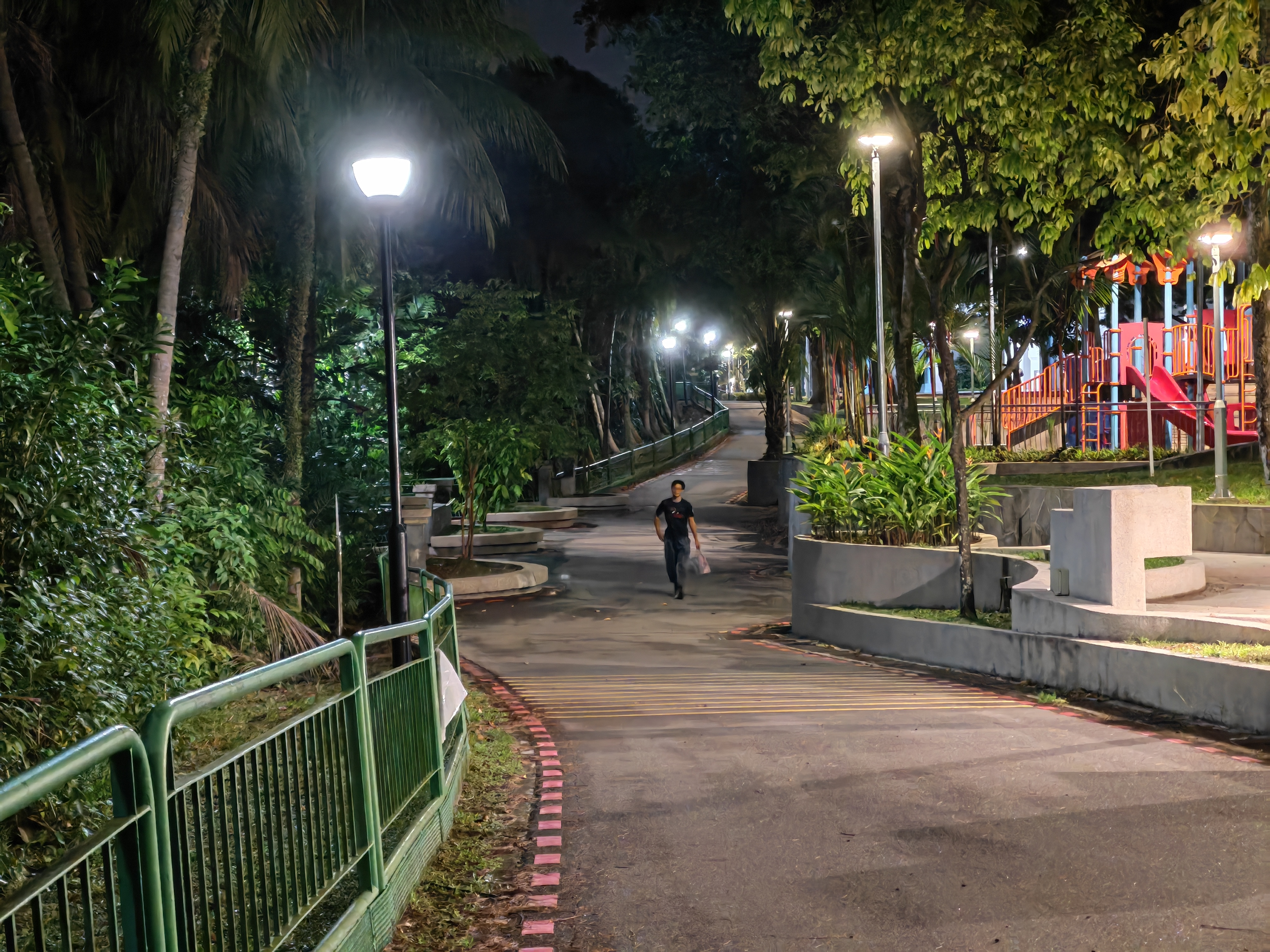
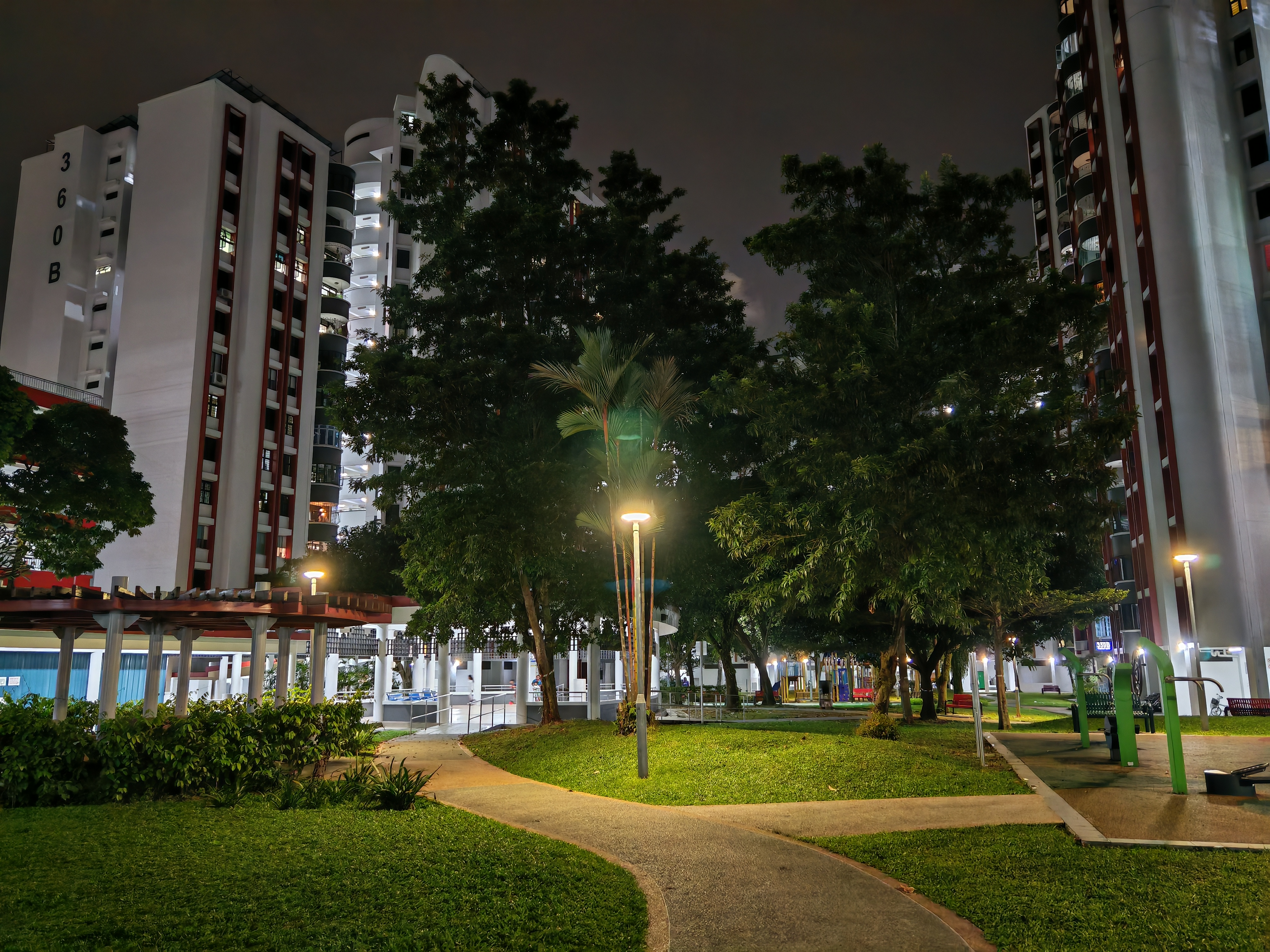
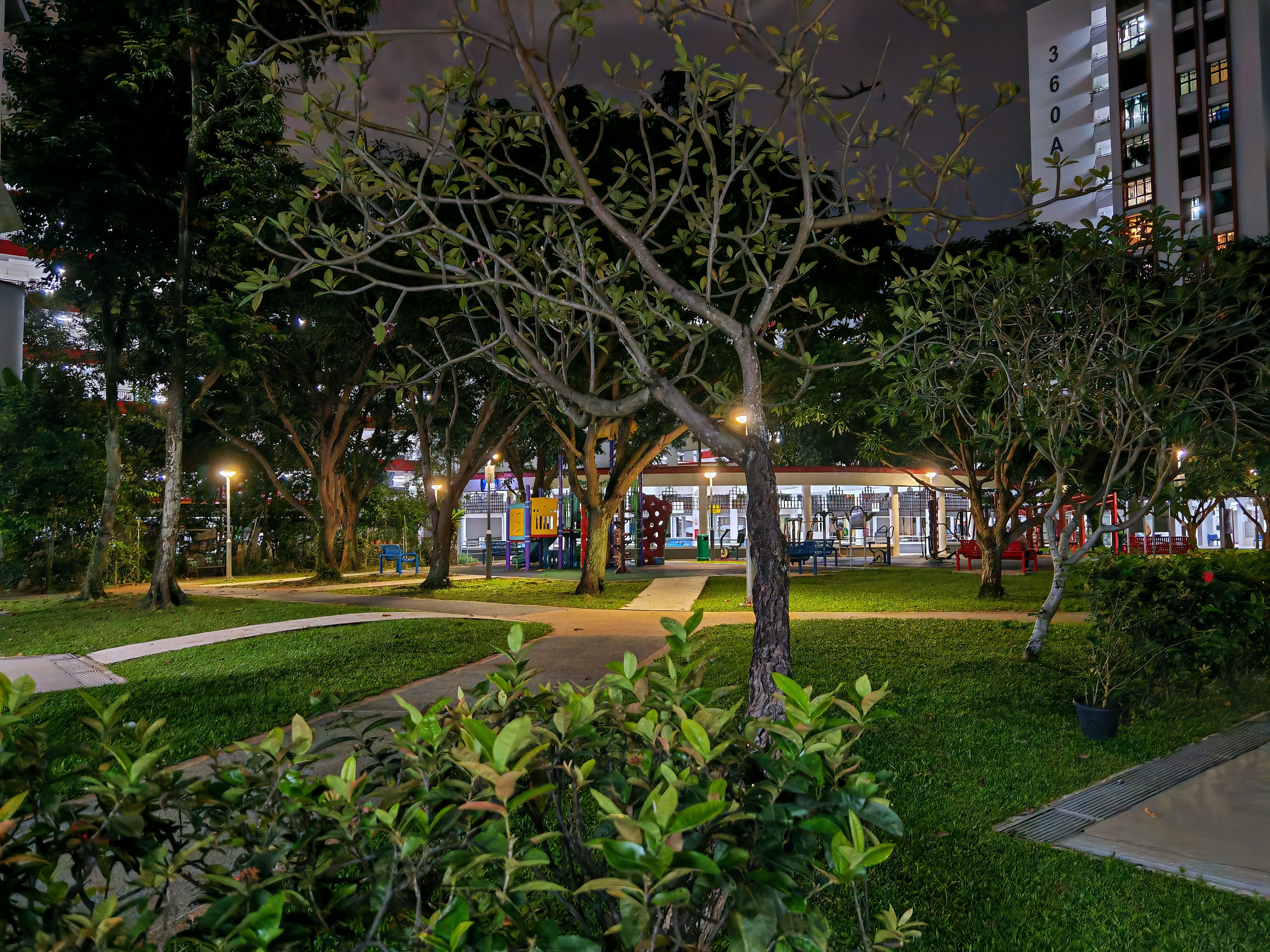
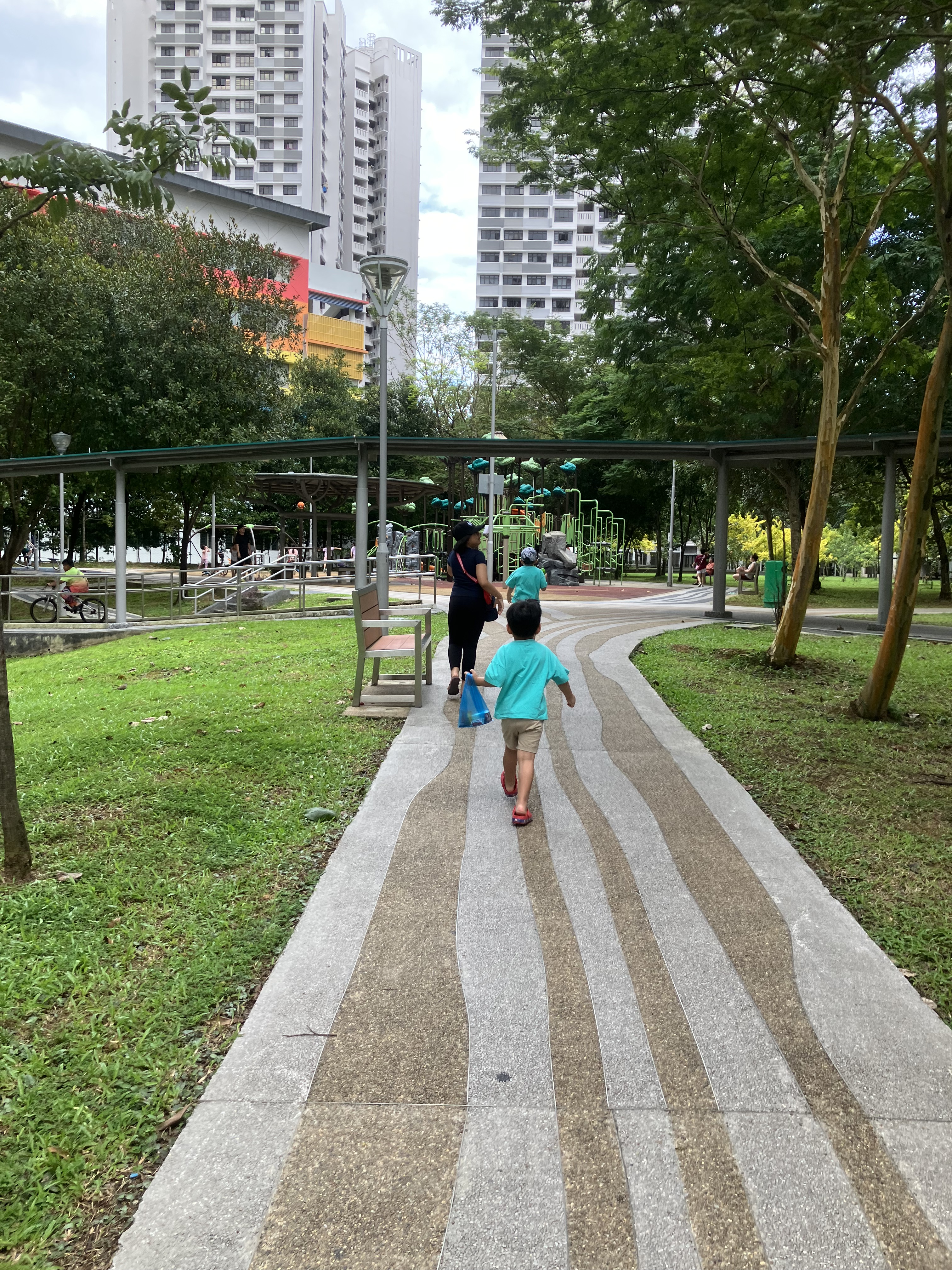
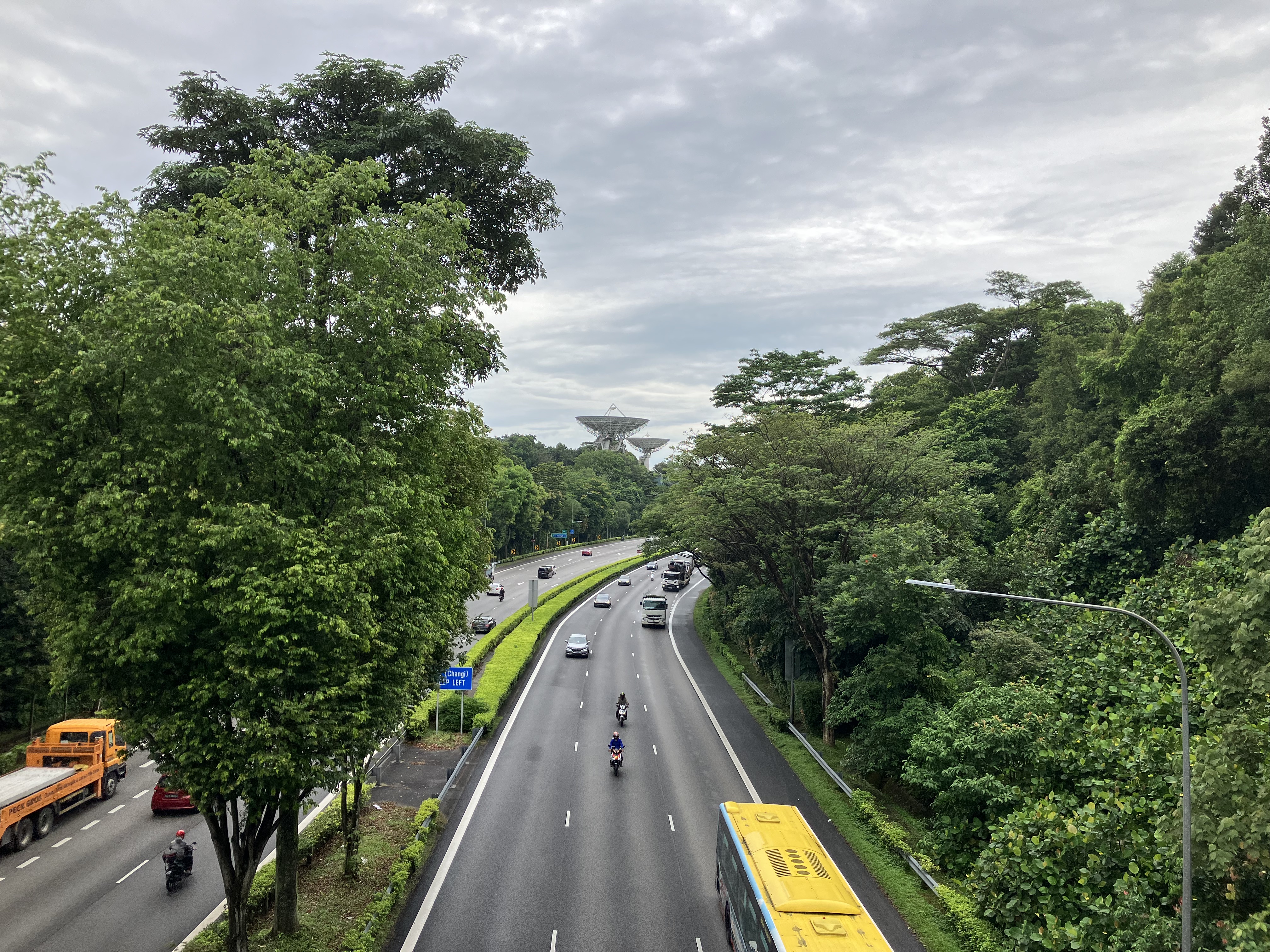
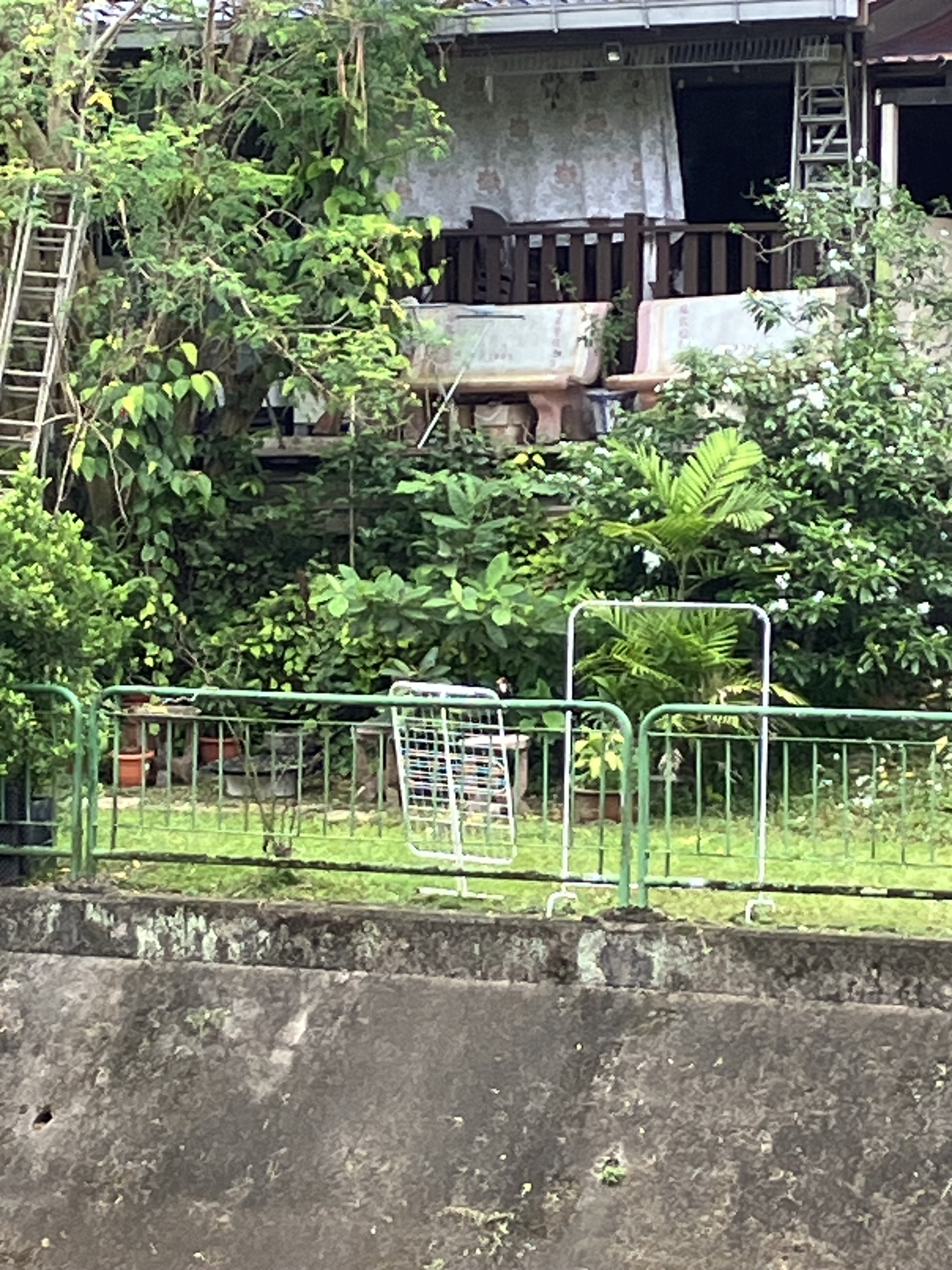
The recent years have seen the planting of native plants and trees, many of them fruit trees. These have helped boost wildlife in Singapore, both native and those who immigrated here like the laughing thrushes below. I first spotted them along the railway corridor in 2024. And saw them again in 2025 at Bukit Timah Nature Reserve. These are definitely some of the benefits of Singapore’s greening the built environment policy.
However there are green spaces, these are very much curated. And it takes an army of National Park Board’s (NPB) employees to maintain their orderliness. As my blog contributor wrote in his piece, linked here,
Sidewalks just like these colonial gardens express beauty as an expression of ordering power. Sidewalks are a site for a highly ordered, docile and ‘drawn within the lines’ greenery. Much in the same vein of Fanon’s description of colonised world as a “compartmentalized world”, the ‘drawn within the lines’ nature of sidewalk greenery express the colonial power’s capacity to order and consciously keep grass and greenery within the desired distribution of the sensible determined by the colonial gardener.
While I commend Singapore’s efforts to create green spaces, their idea have always been rooted in control of the environment. And the exploitation of people. For example, on my recent visit back, I noticed many foreign workers clearing the parks and ponds. Without their hard work3, these green spaces will not be maintained. The NPB has a policy of replacing any dead or diseased plants/trees and all of them need to be monitored. It is not a sustainable model in the long term.
Instead, using more hands-off approach and working with the natural ecosystem might be a better way. An example of this is the Ang Mo Kio – Bishan part of the Kallang River. Here they have renaturalised the river, transforming from a concrete canal into a meandering river bank. Recently, when I visited, I found many different types of fishes and birds around.
Preserving Wild Spaces
Recently I explored the Singapore rail corridor, a 24 km stretch where once the trains would have passed through. In many parts of the corridor, the wildlife had flourished due to the land being undisturbed, except for the trains. The corridor acts as a counterpoint to Singapore’s curated parks and green spaces. The untamed and undominated wildlife within it felt free to be themselves. The corridor is proof that it is possible to let nature takes its own course.
For example, there was this wee burn being formed naturally from the rain as recorded in the video below. Such a burn would be unthinkable in Singapore’s parks.
And I loved the tree canopy, with elder trees reaching over several storeys high. I recorded the experience of walking under them in the video below. Just listen to the birds in the video, they were really singing. These trees are at least a hundred years old because the railway line was built in the early 1900s. And I doubt they have been monitored and maintained by the NPB. Yet they have thrived for so long.
These wild spaces are rare in Singapore and already, the competing need for land has encroached these spaces. In one section, I was walking just beside a construction site where they were building condominiums. The sound of traffic is never far away. We really need to ensure these wild spaces do not slowly disappear because of other (economic) priorities.
On another note, I will be taking a two weeks break in preparation for Ramadhan. Having finished reading a book about animals in the Qur’an, it has inspired me to do a series on animals mentioned in the Qur’an and what lessons we can learn from it. That will be the theme for this coming Ramadhan, God willing.
- National Library Board ↩︎
- https://www.unep.org/news-and-stories/story/city-garden-singapores-journey-becoming-biodiversity-model ↩︎
- Having done clearing, gardening, and rewilding work, I know just how hard their work is. ↩︎

Leave a comment